A quick read
The short version (TL;DR)
- Pre-workout formulas vary. Compare the serving size and the amount of each ingredient, not just the name or number of ingredients [1] [2].
- Caffeine may help some activities but can cause side effects and disrupt sleep. Count caffeine from all sources; sensitivity varies [2] [3] [4].
- Beta-alanine research is mixed and usually involves regular use over weeks; tingling is a side effect, not proof of benefit. Citrulline evidence is limited [2] [5].
- A quality certification can address defined testing risks, not prove that a formula works or is safe for every person [6].
Start with the serving, not the promise
‘Pre-workout’ describes a purpose, not a standard recipe. Powders, capsules and drinks can contain different mixtures of stimulants, amino acids and other ingredients. For a dietary supplement, start with the Supplement Facts serving size and servings per container, then check the amount of each ingredient in that serving. A scoop's total weight is not the amount of any one ingredient. FDA also requires an ‘other ingredients’ list for ingredients not declared in the facts panel; check it for substances you avoid [1].
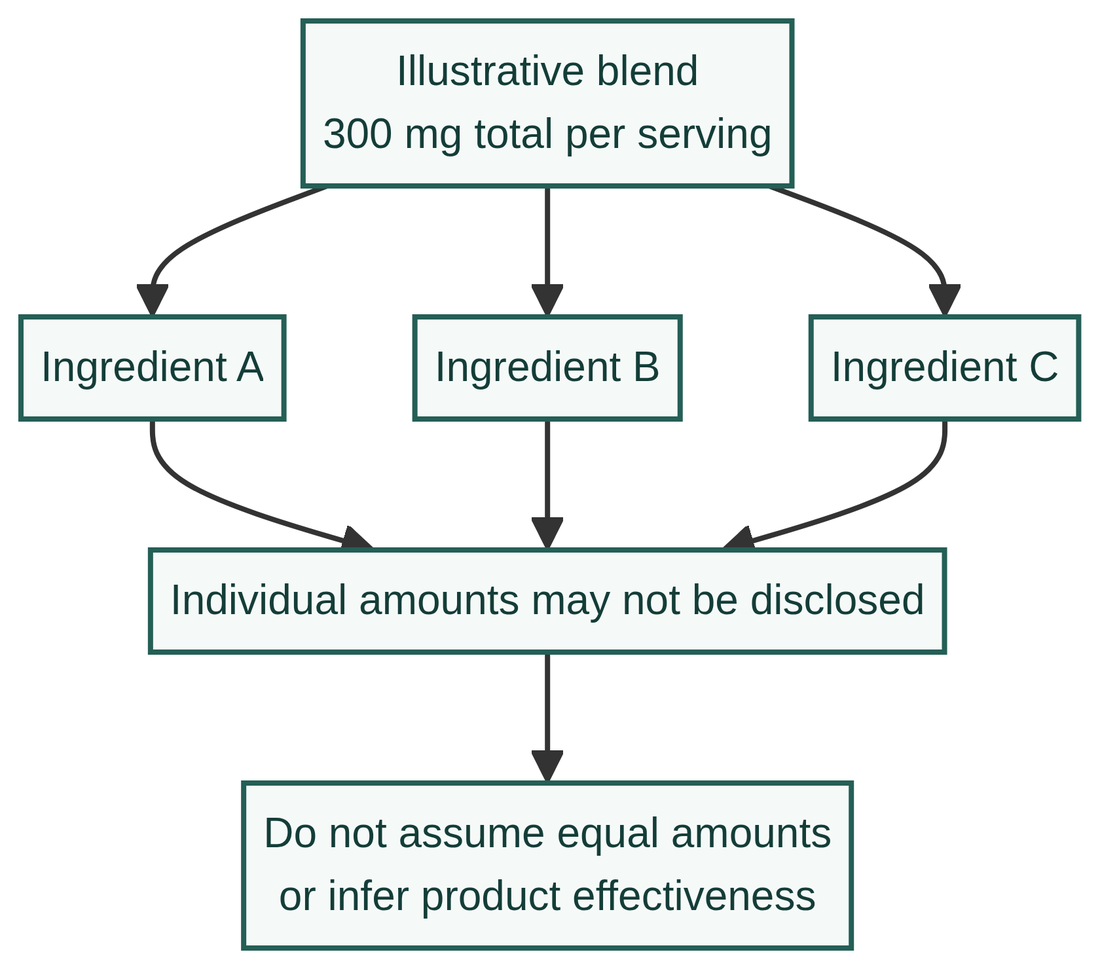
A proprietary blend generally lists a combined weight without specifying each ingredient's amount, making it hard to compare with research or another label. Lack of a separate amount does not, by itself, prove the product is unsafe or ineffective. Much of the research concerns individual ingredients, not the particular combinations sold in products, so an ingredient study cannot establish the effects or safety of an entire formula [1] [2].
Caffeine: count the whole day
Caffeine is a stimulant with evidence for improving some forms of endurance and prolonged intermittent activity, although responses differ and an improvement is not assured. More is not necessarily better: larger amounts increase the risk of side effects without necessarily adding benefit [2]. For most adults, FDA cites 400 milligrams per day as an amount not generally associated with negative effects; it is not a target or a guarantee of safety for an individual [3].
Add up the actual amount consumed from the pre-workout, coffee, tea, energy drinks, medications and other sources. For example, if a hypothetical two-scoop serving has 300 mg caffeine, one scoop would have about 150 mg if evenly mixed; a separate 100 mg coffee would bring the total to about 250 mg. The amount in a particular drink can vary. Guarana can contribute caffeine, and not every label states the total; ask the company if it is unclear [2] [3]. Caffeine can cause jitters, anxiety, palpitations and sleep disruption. NIH notes its effects can last up to eight hours, though the effect on sleep varies [3] [4].
Beta-alanine: the tingle is not the goal
Beta-alanine helps the body make carnosine in muscle. Research on performance is mixed: some studies found small benefits for short, intense or intermittent efforts, while others found none. In one NIH-described review, most participants were young men taking 1.6–6.4 grams daily for four to eight weeks, not a single pre-workout serving. Findings may not apply to every person or activity [2]. NCCIH also describes the results as mixed and generally not showing significant performance improvements [5].
Tingling, prickling or itching can occur after a dose; the sensation is a known side effect, not a sign that the workout is improving. NIH notes that the safety of daily use for more than several months is not well established. Check the amount per serving, but do not assume that matching a study amount makes an untested mixture effective or appropriate for you [2].
Citrulline and the ‘pump’ claim
Citrulline is an amino acid involved in a pathway that can produce nitric oxide, which dilates blood vessels. That mechanism helps explain why labels may use ‘pump’ or blood-flow language. It does not prove a performance benefit: NIH describes the exercise research as limited and conflicting, with studies reporting improved, unchanged or worse performance on different tests [2].
Products may list L-citrulline or citrulline malate, a combination of citrulline and malic acid. A gram of the combination is not a gram of citrulline alone, so form matters when comparing labels and studies. Safety has not been adequately assessed for longer-term supplemental use, and stomach discomfort has been reported. Arginine is another ingredient marketed for blood flow, but NIH finds little evidence for performance benefits [2].
Creatine and amino acids work differently
Creatine helps supply energy for short, intense efforts. Research supports a potential benefit for repeated high-intensity activity, such as sets of weightlifting or sprints, but responses vary and benefits for endurance events appear limited. Studies generally involve taking creatine over time; its presence in a pre-workout does not mean a single scoop will deliver that effect. Water retention and occasional digestive discomfort can occur [2]. People with kidney concerns should discuss creatine with a clinician, and safety data for children and adolescents are limited [5].
Branched-chain amino acids, or BCAAs, are also found in protein-containing foods. NIH finds limited, inconsistent evidence that separate BCAA supplements improve performance or add muscle-building benefits beyond sufficient dietary protein [2]. A powder is not a substitute for adequate food. Protein around training can be useful, but research does not establish one immediate post-workout deadline for everyone; the overall eating pattern and timing of other meals matter [2].
What a quality seal can tell you
The label is a starting point, not independent proof of contents. NCCIH warns that some products marketed for bodybuilding have contained hidden drugs or other undeclared ingredients; this does not mean every pre-workout is adulterated [5]. A newer brand is not inherently lower quality, and an established name is not proof of quality. Evaluate the exact product, current formulation and evidence behind any testing claim rather than relying on brand age.
Independent programs differ in scope. NSF says its Certified for Sport program includes formulation and label review, facility inspections, ongoing monitoring and screening for specified banned substances. Check the exact product in the certifier's current database, and consult your sport's rules if tested. Certification can reduce certain risks; it cannot test for every possible hazard, guarantee an anti-doping result, prove effectiveness or establish personal suitability [6].
Read nextLearn how to verify a certification
Separate research from advertising
Ask what a claim actually studied: the complete formula or one ingredient; which amount and form; which people; and which exercise outcome? A study in trained adults doing a particular test may not predict results for a different activity or person. The FTC says health-product advertising must be truthful, not misleading and supported by appropriate scientific evidence; enthusiastic testimonials are not a substitute for that evidence [2] [7].
In the United States, dietary supplements are not FDA-approved before marketing for safety and effectiveness as drugs are, and they are not intended to diagnose, treat, cure or prevent disease. Manufacturers have responsibility for product safety and truthful labeling. FDA inspects facilities and can take enforcement action; certain new dietary ingredients also require advance notification. Such notification is not approval of the finished supplement [1].
Put the scoop in context
Pre-workout is optional. A suitable meal or snack, fluids, rest and a training routine that fits your circumstances may be enough for many sessions. These are practical foundations, not guarantees of a particular performance result. If you are comparing products, look at the current price per labeled serving, ingredient amounts and whether other supplements duplicate them; a longer ingredient list does not establish a better outcome [2].
Supplements and medicines can interact [8]. Discuss the complete label with a clinician or pharmacist, particularly if you have a medical condition, take medicines, are pregnant or nursing, or are considering a product for a child or teen. FDA cautions that highly concentrated caffeine can have serious consequences [3], while NCCIH notes that many supplements have not been tested in pregnant or nursing people or children [8]. Stop using a product if you have side effects and contact a health professional; seek urgent medical care for severe or alarming symptoms [1] [8].
A few more things
Frequently asked questions
Can I combine a pre-workout with coffee?
Both can contain caffeine, so count their amounts together with caffeine from the rest of the day. FDA's 400 mg figure applies to most adults and is not a personal safety guarantee; sensitivity, medications and health conditions matter [3].
Does creatine have to be taken immediately before exercise?
No. Studies showing benefits for repeated short, intense efforts generally examine creatine taken over time. An ingredient in a pre-workout scoop should not be assumed to have the same effect as a studied regimen [2].
Does a Certified for Sport seal prove the formula improves performance?
No. NSF describes label review, inspections, monitoring and screening for specified banned substances; those are not proof of performance benefits or personal suitability. Verify the exact product in NSF's directory [6].
For the curious
Sources and further reading
Explore the original guidance for more detail. Sources checked .
- FDA: Questions and Answers on Dietary Supplements
- NIH Office of Dietary Supplements: Dietary Supplements for Exercise and Athletic Performance—Health Professional
- FDA: Spilling the Beans: How Much Caffeine is Too Much?
- NIH National Heart, Lung, and Blood Institute: Healthy Sleep Habits
- NCCIH: Bodybuilding and Performance Enhancement Supplements: What You Need To Know
- NSF: Certified for Sport Program
- FTC: Health Products Compliance Guidance
- NCCIH: Using Dietary Supplements Wisely