A quick read
The short version (TL;DR)
- A company’s size, age, following, or packaging cannot establish that a supplement is safe or effective.
- Compare the exact formula, serving, independent quality information, evidence, and current purchase terms—not just the brand story.
- An FDA record, certification, or test report needs context; no single signal guarantees quality or suitability.
- Supplements are optional for many people. Discuss possible interactions and individual needs with a qualified health professional.
Start with the same rules for every brand
A newer company may present a focused product or a distinctive format; an established one may have a longer history or wider distribution. None of those features proves quality. Some directories use an emerging-brand label as a discovery aid; it is not a legal classification, safety designation, or ranking. Compare the specific products, not the stories around them.
In the United States, dietary supplements are not FDA-approved for safety and effectiveness before marketing in the way drugs are, and they are not intended to diagnose, treat, cure, or prevent disease. Manufacturers and distributors are responsible for their products, and applicable good manufacturing practices apply. Some new dietary ingredients require advance notification to FDA; that is not product approval. [1]
Put the actual labels side by side
Ask both brands for the current label of the exact product, flavor, and size. Compare serving size, amounts of dietary ingredients, other ingredients, allergen information, and company contact details. A proprietary blend may disclose the combined amount without specifying each ingredient’s amount, making it harder to compare formulas. A suggested serving is not a personalized dose. [1] [2]
A label tells you what the company declares, not what an independent laboratory has found. The NIH Dietary Supplement Label Database can help locate label information, but it includes products both on and off the market. Check the current seller’s label and availability rather than assuming a database entry is the latest version. [3]
Distinguish testing from a certification
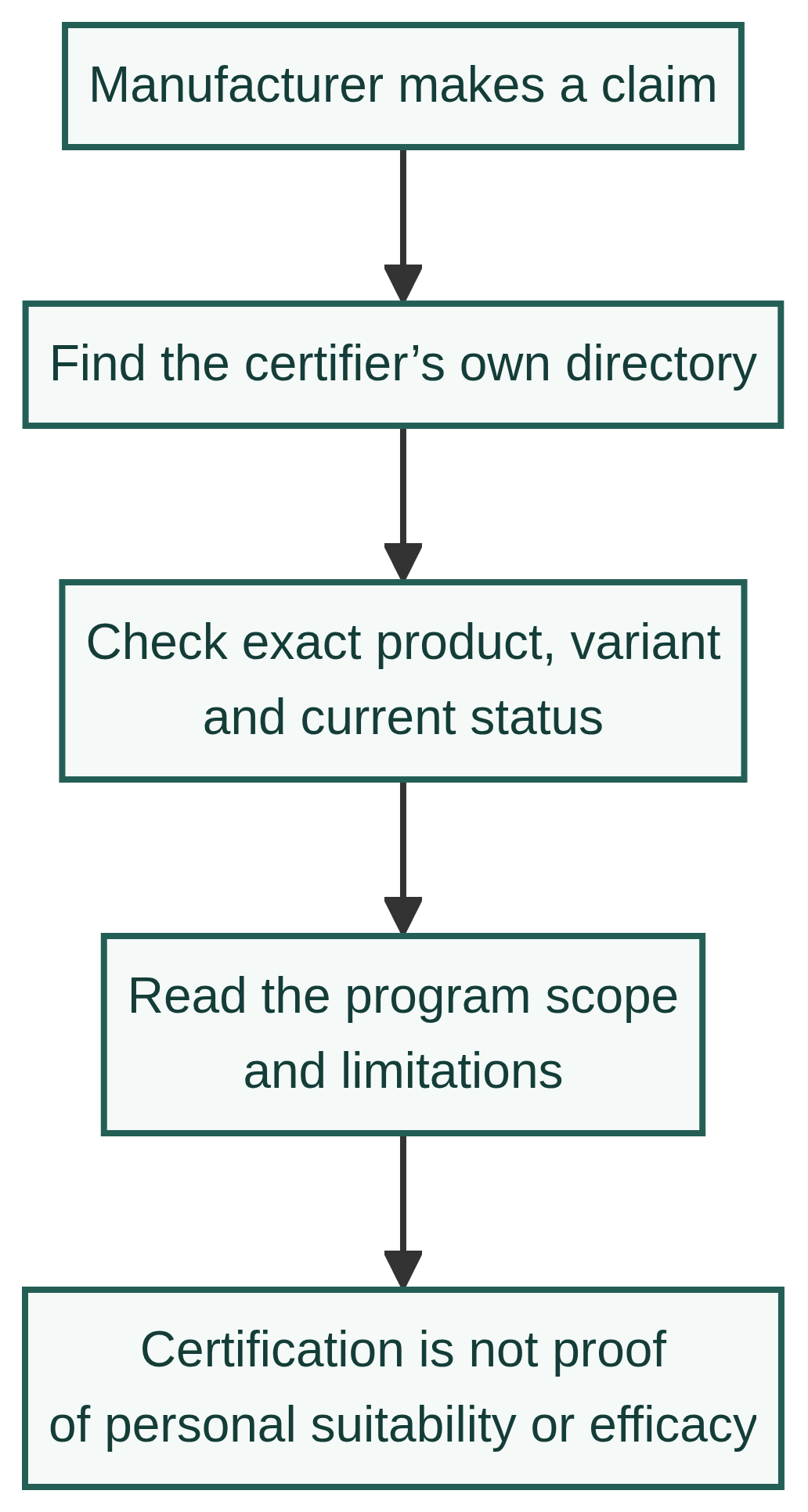
If a brand says “third-party tested,” ask who did the testing, which product and batch were tested, when, and for what. A dated, lot-specific report with the tests, results, and relevant limits is more informative than an unexplained badge. A report for a raw ingredient or one contaminant does not necessarily describe the finished product or other potential contaminants.
Certification programs have different scopes. For example, NSF describes label-claim and contaminant reviews, facility audits, and periodic retesting in its supplement program. Verify the exact product and current status with the certifier; a facility certificate is not automatically certification of every product. A seal does not prove effectiveness or guarantee safety for everyone. A newer brand with little public history or no published report is not thereby proven unsafe—but its quality remains harder to assess. [2] [4]
Match the research to the promise
Ask what a cited study actually tested: the complete formula or one ingredient, the amount used, the people studied, and the outcome measured. An ingredient study can be relevant without establishing the effect of a different multi-ingredient product. One favorable study also needs to be considered alongside the broader evidence, including inconsistent findings. [5]
The FTC says health-product advertising claims must be truthful and supported by competent and reliable scientific evidence; claims should not overstate uncertain evidence. Neither a long company history nor a new scientific-sounding ingredient substitutes for evidence matching a particular claim. Testimonials can describe an experience, but they do not establish that a product caused it or that others will have the same experience. [5]
Apply the comparison to common goals
For protein, compare grams per serving and dietary restrictions rather than accepting a claim that one brand’s shake must be taken immediately after exercise. NIH notes that athletes can often meet protein needs with food and describes timing guidance for athletes. A powder may be convenient, but there is no universally necessary immediate shake; overall intake and individual circumstances matter. [6]
For pre-workouts, compare caffeine and other ingredient amounts and count caffeine from the rest of the day. Caffeine can improve some exercise performance, but may also disturb sleep or cause anxiety; evidence varies by ingredient and activity, and results for ingredients do not establish a blend’s effects. FDA advises avoiding pure or highly concentrated caffeine sold in bulk powder or liquid form because it is difficult to measure safely. [6] [7]
For sleep products, distinguish melatonin from multi-ingredient blends and look for evidence about the particular sleep concern. NCCIH says evidence is insufficient to recommend melatonin for chronic insomnia; short-term use appears safe for most people, but long-term safety is uncertain and interactions can occur. Neither an established name nor a new blend resolves those limits. [8]
Read FDA records in context
Searching FDA records can add context, but identify the company, product, date, issue, and current status before drawing conclusions. A warning letter generally notifies a firm of significant regulatory violations; a recall concerns correction or removal of a product and can be initiated voluntarily or at FDA’s request. These are different actions, not interchangeable grades of brand quality. [9] [10]
For a recall, match the exact product and any listed lot or date codes, then follow the notice’s instructions. FDA’s public safety-alert page does not include every recall. No search result is a clean bill of health, and an old action alone does not establish the status of a current formula. [10] [11]
Compare what you would actually pay
Divide the current price by the number of labeled servings, then check whether those servings contain comparable amounts of the ingredients you are comparing. Add shipping and other checkout charges when considering total cost. For a personalized pack, ask to see the proposed ingredients and quantities before comparing it with a fixed formula.
Check whether the displayed price is a one-time or introductory price, when a subscription renews, and how to cancel or return an order. The FTC warns that some trials can lead to later charges. Read the relevant disclosure on comparison sites or influencer posts: the FTC says a material connection, such as a commission, should be disclosed clearly and conspicuously. A commission is not evidence of product quality. [12] [13]
Decide whether a supplement belongs in the picture
Start with the reason for considering a product and whether food or no purchase would be a reasonable option. If the label, evidence, or purchase terms are unclear, it is reasonable to pause and ask the company for specifics. This comparison is information, not a personalized suggestion to take a supplement.
Share the full label and your medicines and other supplements with a clinician, pharmacist, or dietitian, particularly if you are pregnant or nursing, have a health condition, or are considering a product for a child. Supplements can interact with medicines or each other. If you suspect a harmful reaction, stop using the product, contact a health professional promptly, and consider reporting it to FDA. [1] [2]
A few more things
Frequently asked questions
Does FDA facility registration mean the supplement is FDA-approved?
No. FDA requires certain facilities to register, but dietary supplements are not FDA-approved for safety and effectiveness before marketing like drugs. Registration is not product approval. [1]
What if a brand will not share a certificate of analysis?
Its absence is not proof the product is unsafe. Ask whether there is independent finished-product testing or certification, who performed it, what it covered, and whether it applies to the product or lot. If the answers are insufficient for you, it is reasonable not to buy. NSF describes the scope of its product certification, which is a different claim from a single test report. [4]
Should I buy a subscription to get a lower advertised price?
Only after comparing the actual checkout price, renewal rate and schedule, shipping, return policy, and cancellation process with a one-time purchase. A trial or introductory price may be followed by additional charges. [12]
For the curious
Sources and further reading
Explore the original guidance for more detail. Sources checked .
- FDA: Questions and Answers on Dietary Supplements
- NIH Office of Dietary Supplements: Dietary Supplements—What You Need to Know
- NIH Office of Dietary Supplements: Dietary Supplement Label Database
- NSF: Supplement and Vitamin Certification
- FTC: Health Products Compliance Guidance
- NIH Office of Dietary Supplements: Dietary Supplements for Exercise and Athletic Performance—Health Professional Fact Sheet
- FDA: FDA Warns Consumers About Pure and Highly Concentrated Caffeine
- NCCIH: Melatonin—What You Need To Know
- FDA: Warning Letters Related to Food, Beverages, and Dietary Supplements
- FDA: FDA 101—Product Recalls
- FDA: Recalls, Market Withdrawals, and Safety Alerts
- FTC: Getting In and Out of Free Trials, Auto-Renewals, and Negative Option Subscriptions
- FTC: The FTC’s Endorsement Guides—What People Are Asking